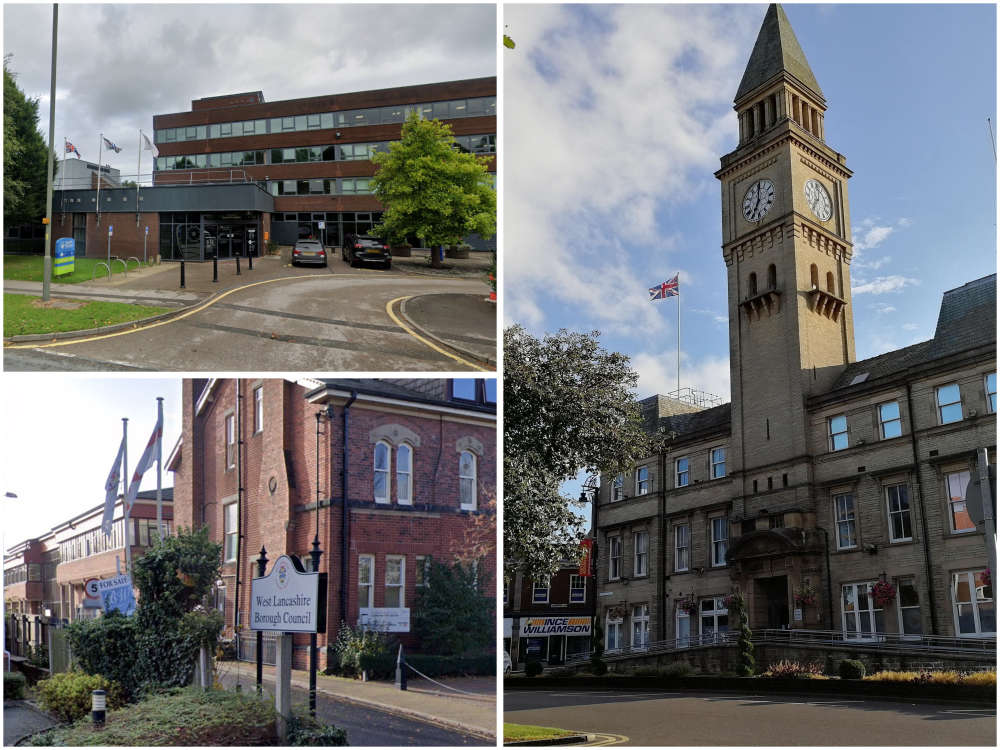
The establishment of a new council for South Ribble, Chorley and West Lancashire has been welcomed by the leaders of the three existing authorities that will be merged to form it – although one of them would rather have seen parts of his district moved out of Lancashire altogether.
The government announced on Thursday that the county will be split into four new council areas from April 2028 as part of the biggest change to the local authority landscape in Lancashire for more than 50 years.
The county’s 15 main councils will disappear and be replaced with standalone ‘unitary’ authorities – including one provisionally named ‘South Lancashire’. That option – binding together Chorley, South Ribble and West Lancashire -had been backed by the trio of current district councils that cover the places it will incorporate. It was one of five that had been put forward by Lancashire as part of the the government-ordered overhaul.
However, David Whittington, the recently-installed Conservative leader of West Lancashire Borough Council, said the revamp had been a missed opportunity to redraw Lancashire’s external borders to better reflect areas that have more of an affinity with neighbouring Sefton and Greater Manchester.
Speaking to the Local Democracy Reporting Service (LDRS), he said: “Personally, I have thought for a long time that West Lancashire’s boundaries are… not [in the] right format.
“If you look at places like Halsall and Aughton, they’re aligned to Merseyside, whereas there are other areas, like Up Holland, Appley Bridge and Wrightington, that are more Wigan [oriented]. Banks [gravitates more] towards Southport.
“So I think it was a mistake not doing a comprehensive review of everything.”
However, ministers – no doubt mindful of the complexity even of an internal overhaul for Lancashire – had ruled out any such cross-boundary changes between the county and its neighbours.
Nevertheless, Cllr Whittington said he was pleased that of the five reorganisation options on the table, – all of them suggested by the 15 existing authorities – the government had chosen the one that bound together West Lancashire, Chorley and South Ribble.
“If Preston had been included, I think it would have become Preston-centric,” he said. “Probably all the council offices would have been based there and I think certain parts of West Lancashire would have been very much on the periphery – but now that won’t happen to the same extent.”
Cllr Whittington said he had already had “constructive” discussions with his counterparts at Chorley and South Ribble – and hoped the authorities could all learn from one another to varying degrees, even before their official merger in just under two years.
Chorley Council’s Labour leader, Alistair Bradley, has long wanted to see the back of the two-tier local authority system – under which service delivery is divided between Lancashire County Council and Lancashire’s dozen district authorities, Chorley included.
Even before the reorganisation process got under way, he had previously pushed to take charge of the roads in the borough – a County Hall responsibility – because of dissatisfaction with the way they were being looked after.
“We’ve said for a long time that the two-tier split isn’t working – it’s expensive and residents are confused by the complexity of it.
“This change makes it very clear – if you’re in this area, then it’s this [new] council who [will be doing] stuff for you,” said Cllr Bradley, who has led Chorley for 14 years.
He added that the new set-up was necessarily “a bit of a balance [between] local accountability and democracy against efficiency” – and said he was delighted with the geographical shape that the new unitary authority would take.
“The sense of place seems to have been the main driver in the government’s decision – [creating] sustainable councils, but linked to the place that they represent. It also acknowledged that Lancashire is very different in its parts.”
Sources had suggested to the LDRS that Chorley’s political class was particularly keen to keep Preston out of any new authority of which the district was a part.
However, Cllr Bradley said Preston had itself proposed coming together with Lancaster and Ribble Valley – and that was “fine with me”.
He added that it was “heartening” the government had acknowledged that the three councils in the new authority area are already working closely together, with Chorley and South Ribble having a long history of sharing back office services and senior roles to reduce costs. Recently, West Lancashire was brought into that arrangement and the trio now share a chief executive.
However, Cllr Bradley said from a resident’s point of view, the most important thing was that the populations and demographics across the soon-to-merge districts were “very similar”.
“It’s working with the natural flow of things,” he said.
He added that he was hopeful a more streamlined council set-up would make agreeing to deepen Lancashire’s devolution arrangements – and install an elected mayor – a less torturous process than it has been to date, because there would be fewer “outlier” authorities disagreeing with it.
“Greater Manchester and Liverpool [City Region] are leaving us behind every day,” Cllr Bradley concluded.
Meanwhile, in South Ribble, the borough council’s Labour leader, Matthew Tomlinson, said his focus since the government announced the overhaul was to get “the best for the people of South Ribble”.
“And I think this is the best we could have got,” he told the LDRS.
“I’m not going to say I’m pleased, because I’m a bit ambivalent about it. I can see why the government are doing it, but as somebody who’s been a South Ribble councillor and a Lancashire county councillor for a long time [27 years and, until last year, 21 years, respectively], I’m a bit nostalgic and I’ll miss the great stuff that we’ve done.”
Cllr Tomlinson said he believed the mechanisms for maintaining more local representation within the new councils – via 42 community boards – were going to be vital.
He added that the shift to new larger authorities might cause those parts of the borough currently without parish or town councils to consider whether establishing one might be a “useful” thing to do.
At the moment, those organisations act as a third, ultra-local tier of authority where they currently exist in South Ribble – in places including Penwortham, Longton and Farington. However, they are absent in some of the borough’s largest centres of population, such as Leyland, Bamber Bridge and Lostock Hall.
Parish and town councils traditionally focus on projects to improve the quality of life in the places they serve. and sometimes running doorstep services. They are also regarded as a vital way of giving communities a voice.
The government last year highlighted their role in areas like Lancashire which are losing their second tier of local district or borough authority.
West Lancashire Borough Council, Chorley Council, South Ribble Borough Council and Lancashire County Council will all continue to operate until 31st March, 2028.
The replacement unitary – serving 359,000 residents – will come into being in so-called ‘shadow’ form from May 2027 when the first set of elections will be held for it.
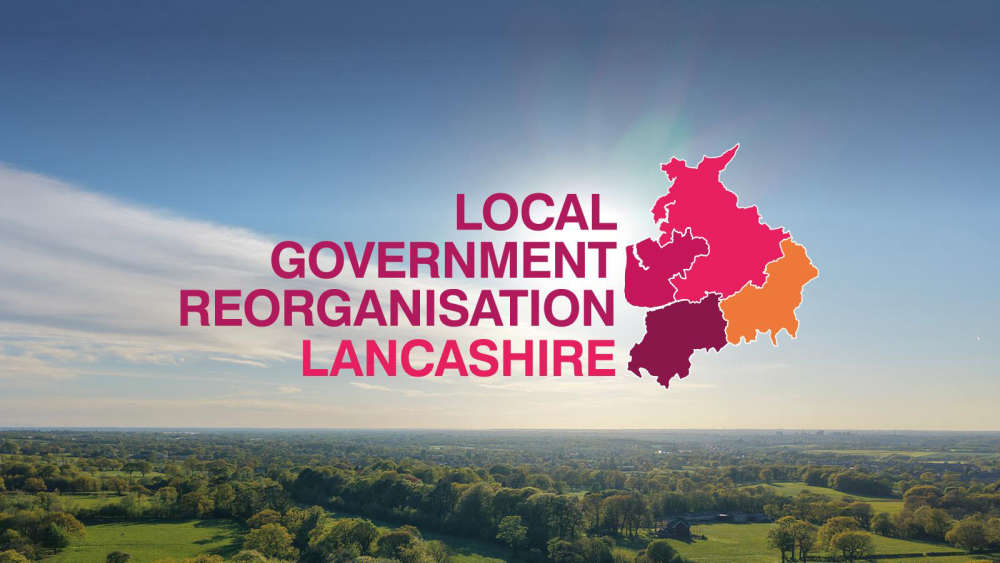
The three other new councils that will be created by the redrawing of the local, government map in Lancashire will bind together: Preston, Lancaster and Ribble Valley; Blackpool, Fylde and Wyre; and Blackburn with Darwen, Burnley, Hyndburn, Rossendale and Pendle.
 Operation targets County Lines drug activity across Preston
 New e-bike law as Lancs leads crackdown
 Preston station cash secured
 ‘Fake or Real? Know the Deal’: Lancashire Police tackles growing deepfake threat
 Council leaders react to delays in Local Government Reorganisation plans
 Plans for local government reorganisation in Lancashire paused
 New road rules for new-look Preston city centre
 Council to end role coordinating refugee resettlement schemes