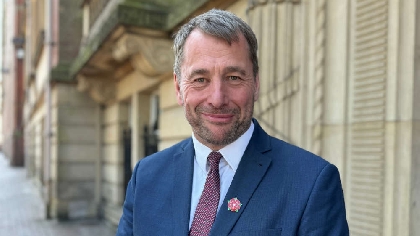
Lancashire County Council is proposing to increase council tax by 3.8 percent next year – 1.2 percent below the maximum amount permitted by the government.
The Reform UK-run authority claims the hike in its share of the bill is the lowest imposed by County Hall in 12 years – and says it has been made possible by running the council in a more “business-like” way since the party took control last May.
However, opposition politicians have accused the administration of breaking pre-election promises to freeze council tax altogether – something that county council leader Stephen Atkinson says was never Reform’s official position.
The council tax proposal was published on Wednesday as part of the draft budget for 2026/27 and, if approved next month, will see the charge paid by a Band D household rise by £65.96 to £1,801.75 from April.
The county council plans to increase the core component of the charge by 1.8 percent – compared to the maximum 2.99 percent allowable without either staging a local referendum or seeking special permission from ministers.
It will, however, take full advantage of a further two percent rise that is permitted when ringfenced to cover social care costs – pushing the overall bill increase to 3.8 percent for residents within the authority’s patch, which excludes Blackpool and Blackburn with Darwen.
Speaking to the Local Democracy Reporting Service (LDRS) before the budget papers were made public, County Cllr Atkinson predicted that the planned rise would be “one of the lowest in the country” – and claimed it came alongside savings and improvements in services, many of which were attributable to the effective use of artificial intelligence (AI).
“It’s the first time in 12 years that this council hasn’t gone for the [maximum council tax rise].
“[At our] first cabinet meeting in June, the financial performance [forecast]…was that the council was overspending its budget by £28m by the end of [2025/26] – that’s nearly disappeared to zero. So we’ve saved two-and-a-half percent [of the overall £1.2bn budget] in six months.
“We think we can save five percent in 12 months by being more efficient, being cleverer, getting more productivity out of our staff [and] using [fewer] agency workers.
“[And] AI is incredible….[it] is going to transform how we interact with councils…[and] how [staff] do assessments,” County Cllr Atkinson said.
He added that requests for education, health and care plans [EHCPs] for young people with special educational needs and disabilities were now being dealt with “in a timely manner” – having previously been part of a backlog of almost 2,000 cases – and that new techniques had been deployed for identifying and filling potholes more effectively.
County Cllr Atkinson acknowledged that the decision not to opt for the maximum 4.99 percent rise would cost the authority about £8m per year.
Quizzed by the LDRS as to whether that loss to the county’s stretched coffers was worth the approximately £20 that Band D households would be spared by the smaller council tax increase, the Reform leader said: “It’s a mindset – you cannot just keep taxing people more and more.
“This was our first year and we wanted to show we’ve made improvements – I think we can go further with those improvements as we carry on.”
However, opposition group leaders rounded on Reform over the rise, sending the LDRS copies of leaflets distributed by the party in some parts of Lancashire ahead of last May’s local elections, which they say made promises about council tax that have not been fulfilled.
One such document declared: “We fight for lower council tax” – and included a panel titled “Freeze council tax”.
Another, issued in the name of the party’s ultimately unsuccessful candidate for the Chorley Rural East division, stated: “Three issues I believe are important to highlight are: slash council waste, fix all potholes, freeze council tax.”
A third, which was pushed through some Lancashire residents’ letterboxes, showed a picture of Nigel Farage alongside three bullet point ‘ticks’, one of which read: “Reduce waste and cut your taxes.”
Azhar Ali, leader of the Progressive Lancashire official opposition alliance of independent and Green Party councillors, accused Reform of having “bribed the people of Lancashire…last year with the promise of cutting waste and freezing council tax”.
He added: “A few months later, at the first opportunity to try and help [them], they increase council tax by a whopping 3.8 percent whilst there is a cost-of-living crisis hitting people hard across the county.
“It’s clear [that] what Reform say and what they do are two totally opposite things. People are finding out the hard way that Reform can’t be trusted – and all they deliver is dust.”
Meanwhile, Conservative opposition group leader Aidy Riggott, a cabinet member in the last administration that was ousted by Reform last May, said: “Given Reform’s pre-election pledges, I am sure residents are surprised to see council tax even going up at all.
“A quick review of the budget papers appears to show that due to the very strong performance of the pension fund under the Conservatives, cost pressures have reduced for Reform by circa £14m a year. Furthermore, government funding has increased by circa £123m over three years.
“So why, if Reform are over £55m a year better off due to the decisions of past Conservative administrations and the current government, have they only reduced the increase in council tax by around £8m?
“Where has the rest gone to and where are the much-vaunted DOGE savings [Reform’s local authority version of the US Department of Government Efficiency]?”, asked County Cllr Riggott, who said he would be pressing the issue “on behalf of the residents of Lancashire”.
Labour group leader Mark Clifford described the council tax increase as “a slap in the face for residents” and questioned why it was necessary in view of what he described as “one of the most generous [government grant settlements] for Lancashire in living memory”.
The Liberal Democrat group was also approached for comment.
County Cllr Atkinson accepted that “some branch people” may have made comments about council tax freezes, but that “officially, from the party, that was never the position”.
“We said we’d save five pounds in every 100, which is what is happening here through the efficiency plan.”
He also claimed that the party would have been able freeze the non-social care element of the bill had the authority not invested, several years ago, in bonds that would now incur “a loss of “£332m” if they were sold at their current depreciated value.
The Lancashire-wide Reform election campaign pledges revolved around putting money back into highway maintenance, which the party claimed was set to be removed under previous budget plans, and pursuing referendums on the prospect of an elected Lancashire mayor and the abolition of all 15 existing local authorities in the county.
Pressed by the LDRS as to whether, notwithstanding that, Lancashire residents who witnessed Reform’s national-level campaigning last year – in which Nigel Farage made repeated claims about waste in local government, including at Lancashire County Council – were entitled to expect a council tax freeze if they elected the party, County Cllr Atkinson said:
“What Nigel Farage said was that this council had one of the highest debt levels in the whole country – £1.2bn – and that’s costing this council about £80m a year to service. About 10 percent of council tax is going on that debt.
“I genuinely thought that we may well be going bust as a council. So to manage to deal with that debt and still come in with a rise one of the lowest in the country, is a massive achievement.”
NUMBERS GAME
The draft budget papers indicate that Lancashire County Council will benefit to the tune of £24m in 2026/27 from the long-awaited ‘fair funding review’ of the way in which grants are allocated to councils. That figure will rise to £40.6m in 2027/28 and £58.4m in 2028/29.
However, in 2026/27 alone, the authority estimates that £93m extra will be needed to meet “increasing demands [on services] and the impact of inflation on budgets” – £54m and £39m, respectively.
The provisional financial settlement from the government for local authorities, published just before Christmas, estimated that by 2028/29, the authority’s core spending power – derived from government grants and council tax income – will stand at £1.479bn, up 26.5 percent compared to 2024/25, by around £310m
However, that uplift included an assumed increase in council tax bills of 4.99 percent in each of the next three years – which now looks unlikely to happen in 2026/27 if Reform’s budget is passed.
Nevertheless, County Cllr Atkinson told the LDRS that the £60m of savings needed before the end of the 2025/26 financial year – and on which the last Tory budget, set in February 2025, was based – would be achieved. He also said he was confident that an increased savings target for next year – up from £43m to what he said he expected to be £65m – would also be delivered, while acknowledging that the process “does get harder” with each passing year.
The county council also completed an “efficiency review “ in November which identified a provisional £22m in savings over the next three years across areas including contacts, processes and property.
 Public urged to be vigilant about counterfeit currency in Lancashire
 £72m highways investment to focus on the roads residents use every day
 Preston driver celebrates 50 years on the buses
 Eco-friendly refill shop and community laundry launched
 Reform UK sets first Lancashire County Council budget
 Lancashire Festival seeks community backing for tenth anniversary year
 Preston North End Sleep Out to return next month
 Comedian raises over £6k for local charity