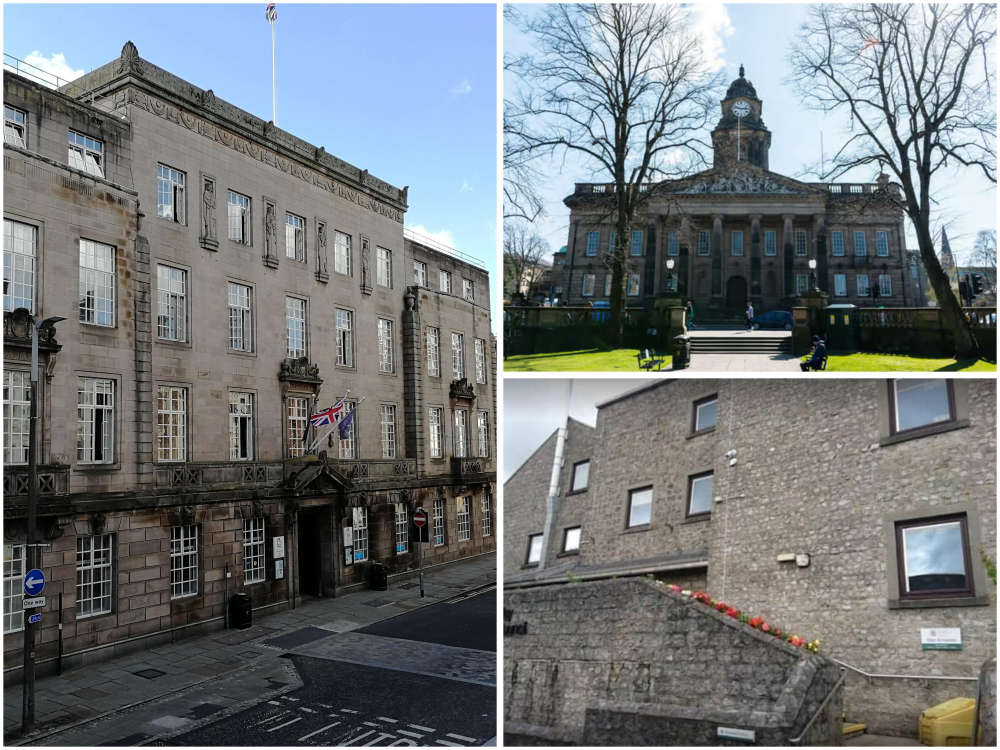
The creation of a new council for Preston, Lancaster and Ribble Valley has been welcomed by the leaders of the three existing authorities that will merge to form it.
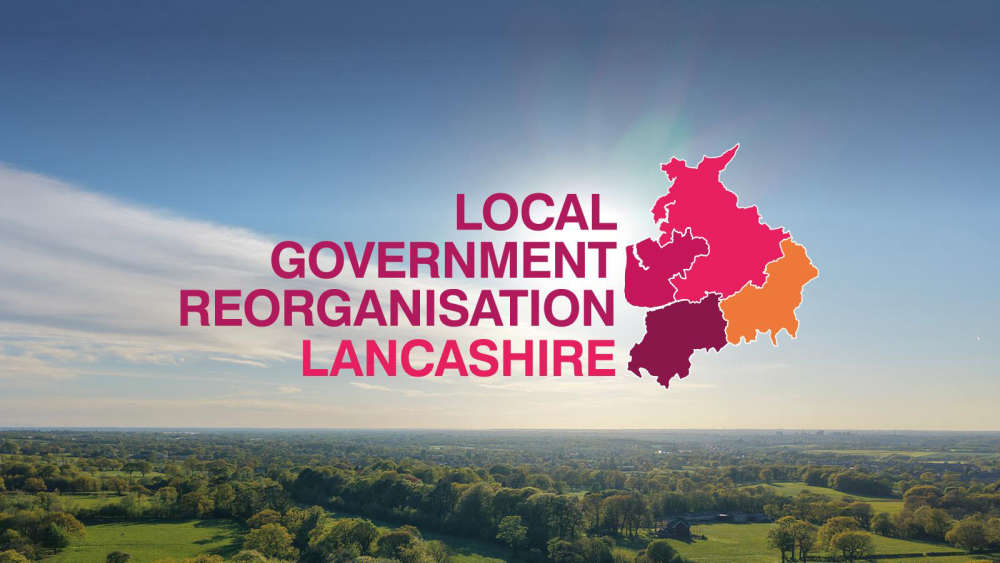
The government announced on Thursday that Lancashire will be split into four new council areas from April 2028 as part of the biggest change to the local authority landscape in the county for more than 50 years.
Lancashire’s 15 main councils will disappear and be replaced with standalone ‘unitary’ authorities – including one provisionally named ‘North Lancashire’. That option – binding together Preston, Lancaster and Ribble Valley – had been backed by the trio of current district councils that cover the places it will incorporate.
According to Preston City Council leader Matthew Brown, the tie-up was “by far the best fit” for Preston of the five reorganisation configurations that had been put on the table – by the county’s existing local authorities – as part of the government-ordered overhaul.
Speaking to the Local Democracy Reporting Service (LDRS), the Labour politician said: “We’ve got the two universities [the University of Lancashire and the University of Lancaster], which collaborate with each other, we have rural communities across all three areas and we’ve also got British Aerospace within [the Ribble Valley part of] the new council’s boundary – and that’s a major employer for people in Preston.
“There’s going to be things like Eden Project North in Morecambe and we’ll have the Dukes Theatre and other things – it’s going to be amazing.”
Asked by the LDRS whether the people of Preston really had more of an affinity with Lancaster and Ribble Valley than their traditional Central Lancashire bedfellows of South Ribble and Chorley, Cllr Brown said: “I think Preston people focus on Preston, primarily. I don’t really fall for this argument that there’s kind of some kind of a cultural alignment with Leyland and Chorley.
“They’re probably equally emotionally connected [to various] other places – and I think a lot of people from Preston do go for days out in the Ribble Valley, which is very nearby.”
He also offered “commiserations” to Blackpool, which had proposed merging with Preston, along with Fylde and western parts of Wyre.
“We all love Blackpool, of course. But, culturally, it’s quite different – because obviously we’ve got lots of rural areas and they are mainly a coastal community. We’ve got a large student population and we’re quite a diverse community as well,” Cllr Brown said.
He added that his ruling Labour group in Preston shared some of the ambitions of administrations that have recently run Lancaster City Council, including “having a fairer economic model and [promoting] new council housing”.
Cllr Brown had been in favour of the government-ordered scrapping of the two-tier council system in Lancashire, whereby responsibility for services is currently divided between Lancashire County Council and the 12 district authorities in all areas except Blackpool and Blackburn with Darwen.
In contrast, Lancaster City Council’s Green Party leader Caroline Jackson acknowledged that she had started out deeply opposed to the shake-up – and still believed there were serious downsides to it, including the fact it will result in fewer councillors representing the area.
However, she told the LDRS she was now hopeful the move could at least offer an opportunity for “new ways of working” that could transform how services are delivered – especially the more challenging ones, many of which are currently the preserve of the county council.
“[We will be able to] look at our adult and children’s services and say, ‘Where are the new ideas?’.
“I think top-tier services do present a challenge – and that’s something that we’re going to have to get to grips with.
“But one of the big opportunities is that [we will have] teams [with] experience…and they’ll have the freedom to think about how they would [provide these services] for a much smaller footprint.
“What are the things they’ve always wanted to do – and how can we create a service that’s really responsive on the ground and fits our needs? [Answering those questions] is the exciting bit of becoming a unitary.
“To start with, I didn’t like the notion of local government reorganisation at all. But now I’ve come round to [believing] it’s an opportunity for new thinking…and providing better services – and so that there might be some compensation for the huge disruption, enormous costs and the loss of democratic voice, which I think is really serious,” Cllr Jackson added.
She added that while the three constituent areas that will make up the new council “do not yet identify with that broader grouping”, there are sufficient commonalities to make their merger make sense.
“We’ve got quite strong SME [small and medium enterprise] and entrepreneurial work going on in Lancaster, Morecombe and Preston – and we’ve got [the] two universities who are both rivals and work co-operatively together. There is also the common rural background between Lancaster and Ribble Valley. – but, as yet, I think it’s all unexplored territory,” Cllr Jackson said.
Meanwhile, the Conservative leader of Ribble Valley, Simon Hore, said that while he would have “preferred to stay as we were”, he was pleased that his favoured merger with Preston and Lancaster had been approved.
Nevertheless he stressed the need for Ribble Valley to retain its own identity within the broader new local authority structure.
“It’ll be a new council and so [none] of the three of us will be dominant over the others. We are by far the smallest in terms of population, but in fact we’re the largest of the [individual district] areas of Lancashire.
“It’ll be important to us to maintain the Ribble Valley brand in some way, because it’s a big tourist area – and we will want to [continue to] promote that,” Cllr Hore explained.
He also told the LDRS that while there was a clear contrast between Ribble Valley as Lancashire’s most rural district and the status of its two new partners as the only cities in the county, there were also genuine connections.
“Lancaster, in particular, has a very rural area and we adjoin in the Trough of Bowland. So we have significant synergies with Lancaster and likewise with Preston, we’re linked through Longridge and people do use that [as a] commuting route,” Cllr Hore added.
Preston City Council, Lancaster City Council, Ribble Valley Borough Council and Lancashire County Council will all continue to operate until 31st March, 2028.
The replacement unitary – serving 374,000 residents – will come into being in so-called ‘shadow’ form from May 2027 when the first set of elections will be held for it.
The three other new councils that will be created by the redrawing of the local, government map in Lancashire will bind together: Chorley, South Ribble and West Lancashire; Blackpool, Fylde and Wyre; and Blackburn with Darwen, Burnley, Hyndburn, Rossendale and Pendle.
 Operation targets County Lines drug activity across Preston
 New e-bike law as Lancs leads crackdown
 Preston station cash secured
 ‘Fake or Real? Know the Deal’: Lancashire Police tackles growing deepfake threat
 Council leaders react to delays in Local Government Reorganisation plans
 Plans for local government reorganisation in Lancashire paused
 New road rules for new-look Preston city centre
 Council to end role coordinating refugee resettlement schemes