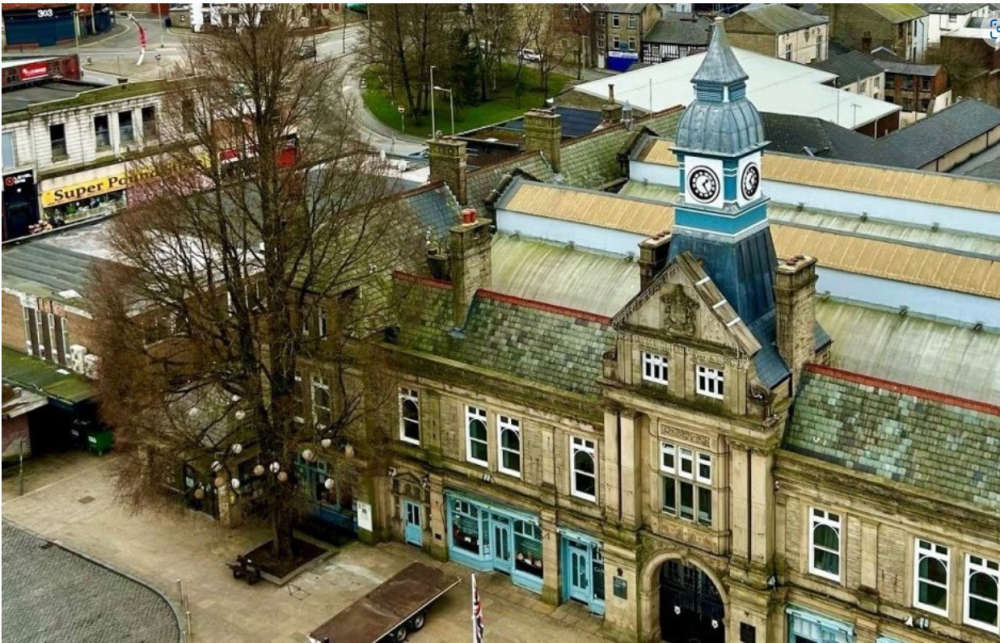
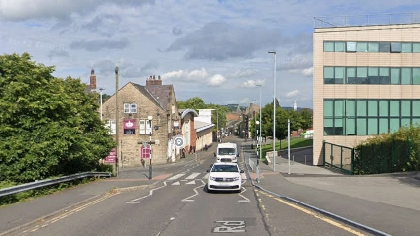
A local authority is to scrap its final remaining air quality management area as levels of harmful emissions from car exhausts at a busy junction have fallen.
Due to a reduction in pollution, it’s been proposed that an Air Quality Management Area (AQMA) in Blackburn South and Lower Darwen is no longer needed.
An AQMA is designated in an area where air pollution levels exceed the national air quality objectives.
In 2012, an AQMA was declared at Blackamoor junction by Blackburn with Darwen Council due to the level of pollution in the air, particularly nitrogen dioxide (NO2), predominantly from vehicle exhausts.
Since 2016, pollution levels in the area have fallen below the national standard.
This follows local action but is also part of a national trend in the reduction of nitrogen dioxide air pollution due to the modernisation of vehicles and the use of cleaner cars.
As a result of the significant long-term improvement, the council is now considering revoking the last of its seven AQMAs at the junction of Stopes Brow, Blackamoor Road and Roman Road.
In February, it asked residents for their opinion in a consultation and two objected to the move.
Ward councillor and Conservative group leader Cllr John Slater said: “I am still very concerned.
“The build-up of traffic there, particularly at peak times, is huge.
“It remains a very vehicle-exhaust-polluted junction. They should not revoke the order.”
In 2023, AQMAs in three other areas of the borough – at Intack, Bastwell and Four Lane Ends – were removed.
The council will continue to monitor pollution levels in and around Blackamoor junction and in other areas of the borough.
A report by Blackburn with Darwen environment boss Cllr Jim Smith said: “This report relates to the revocation of Blackburn with Darwen’s final air quality management area at Blackamoor junction at the intersection of Roman Road and Stopes Brow.
“Long-term monitoring has shown that the levels of nitrogen dioxide at this junction have been below the national air quality objective since 2016.
“Changes in the layout of the road junction and the national trend in the reduction of levels of nitrogen dioxide are the reasons why the order can now be revoked.
“It is important to note that monitoring of air quality at the junction will not cease. It will continue to ensure that levels do not increase.
“Work will still be done across the borough to improve air quality generally.
“This will be presented in an Air Quality Strategy that is currently in development, in addition to other interventions around regulation and enforcement.”
 Man charged after incident at MP jobs event
 Preston driver celebrates 50 years on the buses
 Eco-friendly refill shop and community laundry launched
 More than £21,000 for RSPCA branch
 Zebra crossing repaired after more than a year