Lancashire is gearing up for one of the most consequential weeks in its local government history as it awaits the outcome of an overhaul that will see the county’s 15 main councils abolished.
Ministers are expected to deliver a decision in the coming days on the size and shape of the handful of new authorities that will be created as replacements. In doing so, they will determine which parts of Lancashire are effectively merged as a result.
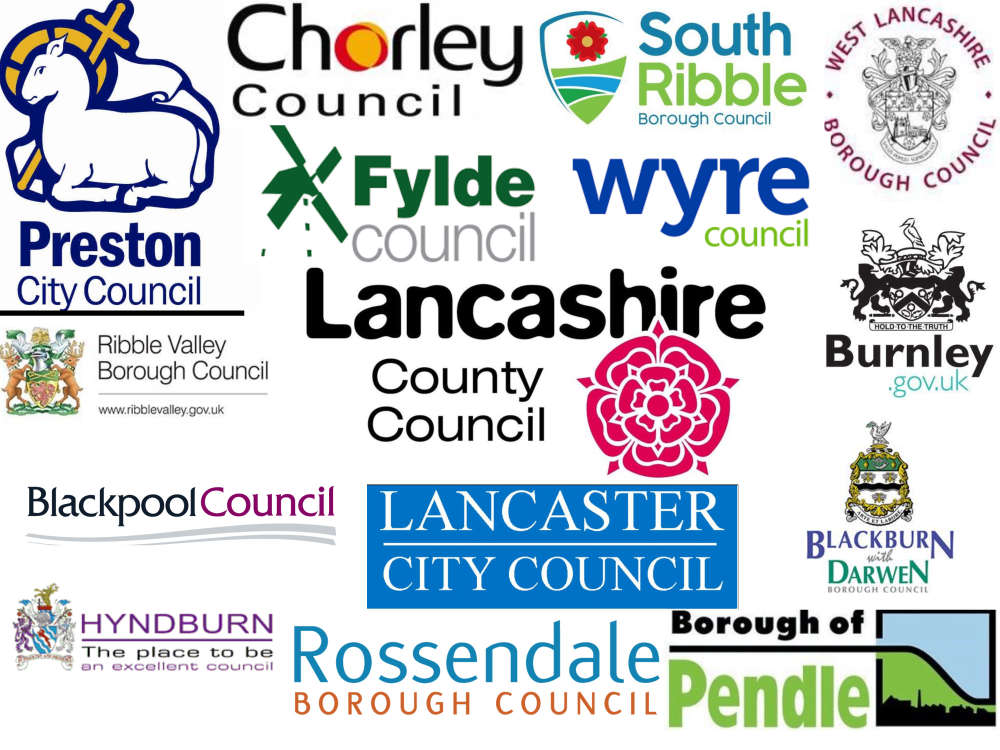
Under the government-ordered shake-up, Lancashire County Council and the local authorities for Blackburn with Darwen, Blackpool, Burnley, Chorley, Fylde, Hyndburn, Lancaster, Pendle, Preston, Ribble Valley, Rossendale, South Ribble, West Lancashire and Wyre will all be scrapped.
In their place – from April 2028 – will come anything between two and five new councils that will cover much larger areas than all of their predecessors bar the county council.
The existing authorities were last year asked by the government to redraw the council map for Lancashire by suggesting how many new bodies should replace them – and which districts should be combined to create the new-look local authority landscape.
Unsurprisingly, the 15 councils failed to coalesce around a single proposal – as the government would have liked – and instead put forward five options (see below), across more than 800 pages of documentation, for ministers to choose from. They were based around the establishment of two, three, four or five new councils – with two versions of the four-council set-up being proposed.
Government guidance indicated that the new authorities should cover populations of around 500,000 people. Lancashire’s population is approximately 1.5 million, which would have made a three-way split the only option – but the county’s leaders were later told that ministers would be flexible over size in order to ensure the new authorities made geographical and practical sense.
Having asked the question, the government is highly likely to select one of the arrangements Lancashire has put on the table – but it could opt instead to modify one of the suggestions or even create its own from scratch. A public consultation was carried out into the county’s local government reorganisation (LGR) options earlier this year.
The government is expected to issue its so-called ‘minded to’ decision before Parliament goes on its summer recess on Friday (17th July). That would set in motion the lengthy legislative process to establish the new authorities.
What will change?
The replacement councils will be responsible for delivering all council services in their patch – ending the current ’two-tier’ system that operates across most of Lancashire.
At the moment, responsibilities are divided between the county council and the dozen district authorities – Burnley, Chorley, Fylde, Hyndburn, Lancaster, Pendle, Preston, Ribble Valley, Rossendale, South Ribble, West Lancashire and Wyre
County Hall looks after major services including adult and children’s social care, roads, transport and schools, while the districts take care of the likes of waste collection, housing, parks and the majority of planning applications.
The new arrangement will create a handful of standalone – or ‘unitary’ – authorities that deliver all local services in their areas, as is already the case for Blackpool and Blackburn with Darwen councils.
All 15 local authorities will be abolished on 31st March, 2028. Elections to ‘shadow’ versions of the replacement councils are due to take place in May 2027.
The changes will see the number of councillors across Lancashire slashed from the almost 700 that currently have seats on the upper and second-tier authorities – to anything between 198 and 313, depending on the chosen configuration.
The current set-up has been in place in Lancashire since the last major shake-up in 1974, with the only shift since being when Blackpool and Blackburn with Darwen became unitaries in 1998.
Why the change – and does everyone want it?
The government announced in December 2024 that it wanted to eradicate the two-tier council system in the 21 county areas of England where it remained. It had gradually been eroded in a series of reorganisations from the 1990s onwards.
During the Convention of the North event held in Preston in February 2025, the then local government minister, Jim McMahon, told the Local Democracy Reporting Service that the division between county and district councils was a waste of public money – and claimed Lancashire residents were paying a “premium” for a confusing system.
“If…you go to your local councillor, how often are you told, ‘Well, actually, I’m not the right councillor, because…I’m your district councillor [and] you need to go to the county’ – and vice versa?” Mr. McMahon asked.
A streamlined local government set-up would also simplify the governance arrangements that would have to be put in place if and when Lancashire gets an elected mayor as part of any deepening of its devolution deal.
While several of Lancashire’s existing councils embraced the move to so-called ‘unitarisation’, others – namely Fylde, Wyre, Ribble Valley, Lancaster, Burnley and Pendle – said just before the government announced its intentions that it was not the right time for such a change.
When a local public engagement exercise was carried out last September into the principle of reorganisation in Lancashire – which did not seek views on individual proposals for new authorities – almost two thirds of the more than 13,000 respondents said they would prefer the current council system to remain in place. The same proportion declared that they were content with the services that the existing authorities provided.
One of the most vocal opponents of LGR, the Reform UK leader of Lancashire County Council, Stephen Atkinson, attempted to secure a legally-binding referendum on the issue after taking control at County Hall in May 2025. However, the government said any public vote that was staged would hold no legal power.
At a cabinet meeting last month, County Cllr Atkinson was asked by Progressive Lancashire opposition group leader Azhar Ali whether whatever decision was reached by the government would be “acceptable” – or if he may consider mounting a legal challenge in the form of a judicial review, as some other Reform-run councils have suggested.
County Cllr Atkinson said he could not “prejudge anything” – and would have to wait until the outcome was known. He said consideration would be given as to whether the new unitaries were “sensible” and “safe” – noting that all councillors had “a duty” to ensure that was the case.
Meanwhile, deputy Progressive Lancashire leader Gina Dowding alighted upon the fact that the government had no “mandate” for reorganisation as it did not feature in the Labour Party’s 2024 general election manifesto.
“As far as the public are concerned, they do like local government to be local – and they don’t like it to be further removed. They like to know their councillors [and]…where services are provided from – and they like to be able to influence them,” County Cllr Dowding said.
Haven’t we been here before?
In the early 1990s, a government commission recommended a move towards single-tier unitary councils in most areas.
Updated guidance issued in 1993 stated that “the government expects that [the continuation of the two-tier structure] to be the exception.” However, Lancashire County Council successfully challenged that stance in a judicial review the following year.
Nevertheless, Blackburn with Darwen and Blackpool councils later made successful bids to become standalone authorities, meaning the county council no longer had any control over those areas.
More than a decade later – amid an open invitation for authorities to put forward proposals for unitary councils in two-tier areas – Preston and South Ribble sought a merger to create a new standalone entity to serve the combined patch. However, the idea was not one of those accepted by the government when it was formally proposed by Preston.
In 2020, the then Conservative-run Lancashire County Council unveiled a surprise plan for its own abolition and that of the county’s 14 other local authorities – and the creation of three new unitary councils: for Central Lancashire, East Lancashire and the Fylde coast, Lancaster and Ribble Valley.. The move followed an indication from the then Tory government that any devolution deal for the county – which at that point seemed stuck in the mud – must be accompanied by a reduction in the number of councils operating in Lancashire in order to make the resultant new combined authority workable.
Within days of that prospectus emerging, Preston City Council confirmed its support for the Central Lancashire unitary – which would see it hook up with South Ribble, Chorley and West Lancashire. But 24 hours later, Chorley and South Ribble put forward a suggestion that they should merge with each other and West Lancashire, but not Preston – a position they have taken ever since.
What’s on the table?
Two councils
Council 1: Blackpool, Fylde, Lancaster, Preston, Ribble Valley and Wyre (722,045 residents)
Council 2: Blackburn with Darwen, Burnley, Chorley, Hyndburn, Pendle, Rossendale, South Ribble and West Lancashire (879,510 residents)
Promoted by: Lancashire County Council
Three councils
Council 1: Blackpool, Fylde, Lancaster and Wyre (493,387 residents)
Council 2: Chorley, Preston, South Ribble and West Lancashire (521,811 residents)
Council 3: Blackburn with Darwen, Burnley, Hyndburn, Pendle, Ribble Valley and Rossendale (586,357 residents)
Promoted by: Blackburn with Darwen, Fylde, Hyndburn, Rossendale and Wyre councils
Four councils (version 1)
Council 1: Blackpool, Fylde and Wyre (348,381 residents)
Council 2: Chorley, South Ribble and West Lancashire (358,947 residents)
Council 3: Blackburn with Darwen, Burnley, Hyndburn, Pendle and Rossendale (520,563 residents)
Council 4: Lancaster, Preston and Ribble Valley (373,664 residents)
Promoted by: Chorley, Lancaster, Preston, Ribble Valley, South Ribble and West Lancashire councils
Four councils (version 2)
Note – the only proposal to suggest splitting up existing districts as part of the changes.
Council 1: Blackpool, Fylde, Preston and western Wyre (475,222 residents)
Council 2: Chorley, South Ribble and West Lancashire (358,947 residents)
Council 3: Blackburn with Darwen, Burnley, Hyndburn, Pendle, southernmost Ribble Valley and Rossendale (565,968 residents)
Council 4: Lancaster, most of Ribble Valley [excluding Clitheroe and southernmost areas] and eastern and northern Wyre (201,508 residents)
Promoted by: Blackpool Council
Five councils
Council 1: Blackpool, Fylde and Preston (348,381 residents)
Council 2: Chorley, South Ribble and West Lancashire (358,947 residents)
Council 3: Blackburn with Darwen, Hyndburn, Ribble Valley (314,302 residents)
Council 4: Lancaster and Wyre (263,749 residents)
Council 5: Burnley, Rossendale and Pendle (272,055 residents)
Promoted by: Burnley and Pendle councils
 Free Christmas parking offer announced for Preston
 Preston City Council renews financial support for vulnerable pensioners
 Preston City Council issue bin collection update
 Closure order granted for problem Preston address
 Bridge strike safety warning
 Car park plan approved for Preston prime site
 Preston man jailed for causing significant injuries to young toddler
 Projects approved for Preston’s Pride in Place Impact Fund